News
What to look for in a rental property (Australia)
Wire · Published 11 Sep 2026 (Australia/Perth) · Last updated 18 Sep 2026 (Australia/Perth)
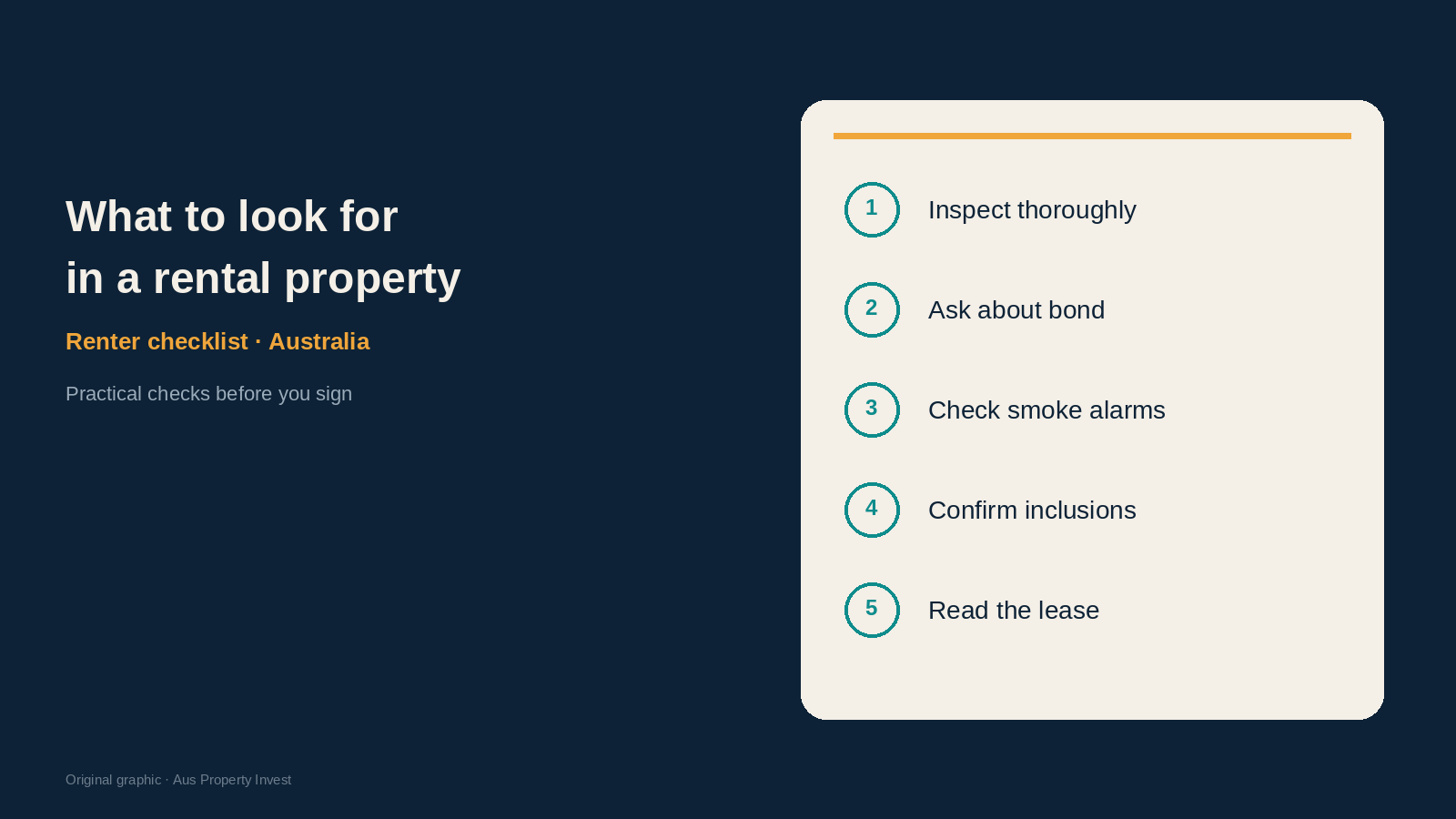
Original graphic · Aus Property Invest
Choosing a rental is about fit for daily life, not investment yield. This guide is for people looking for a place to live in Australia. Residential tenancy rules differ by state and territory, so confirm local detail on the official authority sites listed under Sources before you sign.
Across Australia, the Consumer Price Index (CPI) rents series rose 3.6% in the 12 months to July 2026 (ABS). That measure covers existing and new leases, so local asking rents can move differently. For broader housing and rates context, see Rates vs roofs: RBA September 2026.
When you are ready to compare places, browse rentals.
How this guide was prepared
Written by Wire for Aus Property Invest. Tenancy rules and definitions follow official Australian sources linked under Sources (state and territory Fair Trading / RTA / Consumer Affairs pages, ASIC Moneysmart, ABS CPI where cited). Residential tenancy law differs by jurisdiction. This is general information for people renting a home to live in, not legal advice for a specific lease or dispute.
1. Start with your needs and budget
Before you book inspections, write down what the household actually needs.
For broader rent and price context across markets, check Australian median rents and yields by state.
Household and commute
- Bedrooms, storage, yard, accessibility (stairs, lift, parking near the entry)
- Pets, children, housemates, or working from home
- Realistic peak-hour travel to work, study, school, or care, plus a backup if one transport mode fails
- Whether you need a fixed term of a set length (for example aligned to a job or study year)
Budget: rent is not the full cost
ASIC’s Moneysmart guidance is clear that rent is only part of the picture. Plan for:
- Weekly or fortnightly rent
- Bond (commonly up to about four weeks’ rent in many jurisdictions; Victoria’s standard cap is generally one month’s rent; higher-rent thresholds and pet bonds apply in some places)
- Rent in advance (often limited by law; check your state or territory authority)
- Electricity, gas, water (who pays what is usually set out in the agreement)
- Internet, contents insurance, parking permits, and moving costs
Build a simple budget before you apply (Moneysmart budget planner). If bond is a barrier, ask your state or territory housing service about bond loan or assistance schemes (for example Rentstart in NSW, bond loans in Queensland). Eligibility rules apply. There is no single legal “safe” rent-to-income percentage nationwide: use your own after-tax income and fixed costs.
2. Location checks
Visit the street at the times you would actually live there: weekday morning, evening, and a weekend if you can.
Transport and amenities
- Frequency and reliability of public transport, not only distance on a map
- Groceries, pharmacy, GP, and open space within a workable distance
- Footpaths, lighting, and road safety for night arrivals or children
Flood, bushfire, and other hazards
Ask the agent about known flooding or bushfire history, then verify with official maps and your local council. Starting points:
- Queensland: FloodCheck Queensland and your council’s flood portal
- Victoria: Know your risk and VicPlan / Catchment Management Authority advice
- NSW and elsewhere: council flood information, planning certificates, and state bushfire-prone land maps
Hazard maps are planning and emergency tools, not insurance advice. If you rent in a higher-risk area, check what your contents policy covers.
3. The property: condition, health, and safety
Slow down at inspection. Look for issues that are expensive or stressful to live with.
Damp, mould, and ventilation
- Musty smell, black spotting on ceilings, windows, or wardrobe backs
- Condensation that does not clear, wet carpet edges, peeling paint
- Working exhaust fans in wet areas, and windows that open and lock
Note damp or mould on the entry condition report and in writing to the agent. Repair rights and minimum standards differ by jurisdiction (Victoria has prescribed minimum standards; Queensland has minimum housing standards reforms; other states set repair duties through their residential tenancies Acts).
Safety (high level)
- Working smoke alarms: landlords generally must ensure compliant alarms; testing and battery duties vary (see NSW Fair Trading, Consumer Affairs Victoria, RTA Queensland)
- Secure locks on external doors and windows
- Pool or spa fencing where a pool exists (state building and safety standards; clarify who must fix obvious defects before you move in)
- Safe stairs, balustrades, and external lighting
Liveability
- Natural light, noise at different times of day, hot water, heating or cooling that works, phone and internet reception, storage, and a usable kitchen and laundry
4. House, apartment, or townhouse
House or townhouse: you usually deal with the landlord or agent for dwelling repairs. Clarify who mows, who fixes fences, and how parking works.
Apartment or unit (strata / body corporate): common property (lifts, gardens, some shared services) is typically managed by the owners corporation, while the landlord remains responsible for the lot and tenancy repairs. Ask about visitor parking, moving-in rules, and known defects. Smoke alarm duties in strata can involve both the owners corporation and the landlord (NSW Fair Trading). Poor building maintenance still affects daily life even though you are not buying into the scheme.
5. Lease terms: read before you sign
Australian residential tenancies commonly use a fixed-term agreement (for example six or 12 months) that may then continue as a periodic agreement. Notice periods, grounds to end a tenancy, and rent-increase rules are set in each state and territory’s legislation.
Check on every agreement
- Start and end dates, rent amount, payment method, and due date
- Whether rent can rise during the fixed term, and how notice must be given
- Break-lease / early ending rules (domestic violence and other protected pathways exist in several jurisdictions)
- Pets: many jurisdictions limit how a landlord can refuse a pet request (for example NSW reforms from May 2025). Get approval in writing
- Who pays which utilities, plus any special terms (lawn care, parking). Special terms cannot contract out of mandatory tenancy rights
Rent increases (pattern, not identical everywhere): several jurisdictions limit how often rent can rise, commonly once in 12 months. NSW Fair Trading limits increases to once per year for all lease types (from 31 October 2024). Queensland applies a 12-month limit on a per-premises basis. Notice periods differ (Victoria’s is among the longer ones). Always check the current rule where the property is.
Ending a tenancy: “no grounds” landlord terminations have been restricted or removed in some places (NSW requires a permitted reason). Other jurisdictions have their own grounds and notice lengths. Do not assume one state’s rule applies next door.
6. Application readiness and privacy
Have documents ready: proof of identity, evidence you can pay the rent, rental history or references if you have them, and referee contacts.
Privacy and tenancy laws limit over-collection. The OAIC notes that if the Privacy Act applies, agents should only collect personal information that is reasonably necessary. State rules go further in places:
- Victoria: from 31 March 2026, prescribed application forms apply; agents can only ask for information on that form. Consumer Affairs Victoria lists information that cannot be requested (including bond history and certain dispute history).
- Queensland: the RTA approved application process limits document categories (generally a maximum of two documents each for identity, financial capacity, and suitability) and restricts questions such as bond history and tribunal dispute history.
- NSW: Fair Trading guidance and the Residential Tenancies Act restrict application and background-check fees; agents should explain why information is collected.
You generally should not be charged an application fee. Residential tenancy databases are regulated: ask whether a check will be run, and know you have rights to access and correct listings.
7. Inspection checklist (printable)
Note the address, date, and agent name, then work through:
Outside: roof and gutters from ground level; fences, gates, lighting; parking and permit rules; pool fence and self-closing gate if present; flood marks or raised power points.
Security and safety: external locks; smoke alarms present (ask when last tested); how many key or fob sets at start.
Inside: walls, ceilings, floors; windows latch; lights and sample power points; kitchen taps, oven, under-sink leaks; bathroom fan, hot water, mould smell; storage.
Ask the agent: why the tenant is leaving; what rent includes; repair history; application process; bond amount, lodgement channel, and rent in advance.
8. Red flags
Walk away or dig deeper if you see:
- Pressure to pay a holding fee, bond, or rent into a personal account before a written agreement and official bond pathway
- Application or “background check” fees your state prohibits
- Reluctance to allow a proper inspection or to put pet or repair promises in writing
- Strong mould, active leaks, unsafe stairs, missing smoke alarms, or defective pool fencing with no clear repair plan
- Rent invited “above asking” where rent bidding or accepting higher offers is banned (rules differ; Queensland and Victoria are among those with stronger bans)
- Vague answers on who lodges the bond, or suggestions it will be “held by the landlord” in a state that requires lodgement with the bond authority (the Northern Territory is different: there is no central bond authority and bonds are held in trust under NT rules; confirm locally)
- Photos that do not match the property in person
9. After you move in
Condition report: complete the entry condition report within the required timeframe, add anything missed (dated photos help), and return your copy. It is central if there is a bond claim later.
Bond lodgement: in most states and territories the bond must be lodged with the official bond authority:
- NSW: Rental Bonds Online / NSW Fair Trading (Smart Rental Bonds transfer options rolling out from August 2026 for eligible moves within NSW)
- Victoria: Residential Tenancies Bond Authority (RTBA); portable bond arrangements for eligible renters (confirm on Consumer Affairs Victoria)
- Queensland: Residential Tenancies Authority (RTA)
- South Australia: Consumer and Business Services (Residential Bonds Online)
- Western Australia: Bonds Administration (Consumer Protection)
- Tasmania and ACT: lodge via the local bond authority as required
- Northern Territory: no central lodgement authority; bond held in trust under NT rules
Keep your bond receipt or online confirmation.
First weeks: test smoke alarms as required for tenants in your state and report faults in writing; note meter readings if you pay usage; report urgent repairs promptly; use a fee-free rent payment method where your state requires one to be offered (for example NSW requires bank transfer and Centrepay options without extra fees). If something goes wrong, contact your state or territory tenancy authority or a local tenants’ advice service early (NCAT, VCAT, QCAT, and equivalents elsewhere).
Related on Aus Property Invest
- Australian median rents and yields
- City market health: Sydney, Melbourne, Brisbane, Perth
- Example suburb pages: Sydney CBD, Melbourne CBD
- Browse rentals
- Rates vs roofs (CPI rents context)
- ABS dwelling stock value, June quarter 2026
How we report: Wire.
10. Sources
Primary and official references (accessed September 2026):
- ABS CPI, July 2026 (rents +3.6% annually)
- NSW Fair Trading: renting and Changes to rental laws
- Consumer Affairs Victoria: Renting
- Residential Tenancies Authority (Queensland)
- WA Consumer Protection: rental bonds
- SA.GOV.AU: rent and bond
- Moneysmart: rental bonds and leases
- OAIC: tenancy and privacy
- FloodCheck Queensland
- Victoria: know your risk
Confirm current rules with the tenancy authority for the state or territory where the property is located.
General information only. Not financial, investment, legal or tax advice. See our Disclaimer.